Practical and Sustainable Reforms
Published on December 12, 2025
Waling’s Public Health Act Sets a New Standard for Local Health Governance
Sudeshna Thapa, Veera Lamichhane

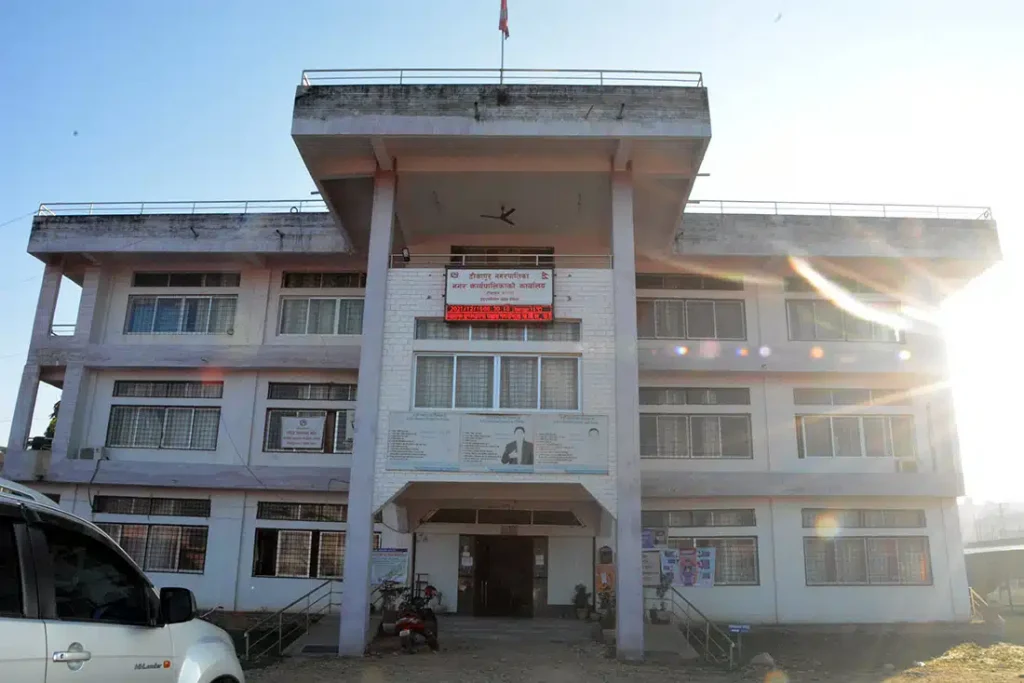
Once a modest Primary Health Center, Garhaun Primary Hospital in Waling Municipality has undergone a remarkable transformation. From providing limited outpatient services, the facility has expanded into a 15-bed hospital offering 24-hour emergency services, cesarean section (C-section) deliveries, and minor surgeries, all backed by modern diagnostic and laboratory equipment. Today, the hospital generates an impressive 80 million rupees annually, mainly through its pharmacy and diagnostic services, and employs 60 personnel, including specialists, nurses, and technical staff.
This remarkable progress was enabled by the Waling Municipality Public Health Act, 2022. It was the first local-level public health legislation in Nepal enacted after the introduction of federalism. Grounded in the Constitution of Nepal (2015), which grants local governments exclusive authority over basic health, sanitation, and nutrition services, including the drafting, implementation, monitoring, and regulation of related laws, policies, and standards, the Act provides the legal framework needed to translate the constitutional mandate into practice. Recognizing health as a core local function, Waling municipality embraced support to develop a law suited to its specific context. Thus, with technical support from Public Policy Pathshala (PPP) under the Subnational Governance Program (SNGP), the municipality crafted a law tailored to its needs—marking a decisive shift from centralized health governance to a locally responsive system.
“The Act allowed us to localize health-related laws and respond to the unique needs of the local community effectively—as opposed to previous laws that were centralized and did not speak to the local context.”
— Dilip Pratap Khand, Former Mayor, Waling Municipality and Chairperson, Hospital Management Board, Garhaun Hospital
The Act was developed through a participatory and inclusive process, rooted in local realities. It combined extensive reviews of existing laws with field observations and multi-stakeholder consultations. Input from legal experts, medical professionals, teachers, Female Community Health Volunteers (FCHVs), and community members ensured that the legislation reflected genuine community priorities.
“Because the policy formulation process involved active participation of the local community, community members took ownership of the Act and supported its implementation.”
— Kamal Prasad Pandey, Section Chief, Waling Municipality
As a result, the Public Health Act embedded a range of innovative, community-centered provisions that have since reimagined how health services are delivered at the municipal level:

- The municipality established municipal-run pharmacies, offering affordable, quality medicines to all residents.
- Mandatory health insurance was introduced, with special provisions for vulnerable groups, including the elderly and persons with disabilities.
- The Act ensured 24/7 ambulance services for rapid emergency response across all wards.
- A School Health Program, unique to Waling, was launched in collaboration with educational institutions, with School Health Nurses providing regular health checkups and awareness programs in 10 local schools.
- A Community Health Nurse program, developed in coordination with the federal Ministry of Health and Population, ensured each of Waling’s 14 wards has access to essential preventive and primary care services.
- The Act created an Emergency Health Services Fund and a Health Infrastructure Maintenance Fund, safeguarding the sustainability and resilience of the local health system.
Additionally, the Act clearly defined the roles and responsibilities of the Local Public Health Board and provided detailed operational and management guidelines for health institutions. Its implementation is reflected in strong performance under the Minimum Health Service Standard (MSS) assessment for fiscal year 2080/81, with Garhaun Hospital scoring 100 percent in financial management and 93 percent in both overall governance and management, as well as in medical records and information management.
“Internal management at the hospital has greatly improved. Things are a lot more systematic, and we are able to provide quality services to the local community.”
— Shankar GC, Insurance Section Official, Garhaun Hospital
These reforms have made a visible impact. Garhaun Hospital now serves over 400 patients daily, attracting residents from Waling and neighboring districts of Syangja, Parbat, and Gulmi. The availability of subsidized diagnostic tests and essential medicines has significantly improved affordability and accessibility, with insurance coverage ensuring equitable care.
“While we had to travel to hospitals in nearby cities such as Pokhara for services such as C-section delivery, it is a lot easier now that these services are available at the Waling Primary Hospital.”
— Local female community representative
Waling’s experience has set a benchmark for local health governance under federalism. The Public Health Act has inspired similar legislative efforts in other municipalities, such as Mithila, Damak, and Tikapur. Mithila and Damak have already enacted their localized public health laws, while Tikapur is in the drafting phase, all drawing lessons from Waling’s approach.
“Officials from several neighboring municipalities have sought guidance from us for making similar laws in their own municipalities and emulated provisions of the Waling Public Health Act.”
— Dilip Pratap Khand, Former Mayor, Waling Municipality

Waling’s success story demonstrates how empowered local governments, equipped with the right tools and frameworks and committed leadership, can lead transformational change in public health. The passion, commitment, and dedication of locally elected representatives, along with their willingness to work closely with community stakeholders, played a pivotal role in making the Waling Municipality Public Health Act a practical and implementable instrument. The Act is more than just a legal document — it is a living example of federalism in action, placing community needs at the heart of governance. With growing interest across Nepal, Waling’s model offers a replicable blueprint for sustainable, community-owned health reform from the ground up.